
Surfers have their heroes and innovators (tunneling, tow-in etc.) These ideas have gotten us to a new generation of wave masters. For those of you who are secret surfers, you may know who some of these people are.
The global communities of big wave surfers roam the planet looking for bigger opportunities. As the world gets smaller and technology gets better, they can arrive just in time for just the right moment. And while they are waiting, they are conditioning themselves and training.
So what’s this all got to do with Supply Chain Management? Well, the “Eddie Aikau Big Wave Invitational”, that’s what.
Eddie Aikau is a surfer who died riding the big waves, an ironic title for a surfing contest where, we assume, everyone still wants to live through it. Not just live through, but be the best to conquer the waves. Ride—and not just ride and live, but also innovate. And, I presume, you would rather survive in your profession than have a contest named after you!
Early in my career, I attended a change management program. We were told that when change happens there are three choices you have: go to shore (i.e. get out of the profession and go open a surf shop); ride the wave; or get pounded (and possibly drown) by the wave.
The construct, of course, of what the change would be or how I would prepare for it was only dimly articulated. So, I learned two important lessons from this —having been in the mix master of waves myself, that did not seem like an alternative I wanted to experience again:
- Of course, I wanted to ride these waves, and
- It was going to be up to me to see them coming, and to understand the size, force and other elements of these waves, to prepare for them.
In this issue of Parallax View we are providing some insights on the change for Supply Chain Managers. My colleagues have written other facets of these changes. It is profound. Hopefully, these articles will help you to prepare, if you are not already out there surfing already.
My two basic lessons have been reinforced over and over again over the years. Mentors are few and far between, and real seers are even scarcer. So, to avoid the mix master gasping for my professional breath, I had to learn to see those waves coming.
A little boasting here for the home team… I know we have done a really good job of seeing the waves and telling the world, our readers, students and attendees at various forums that we have spoken at. For several years we talked about RFID, and then Wal-Mart and the DoD gave the command. In 2004 we started writing about Green Chains and sustainable practices, and had speakers and guests on the topic. BP got on-board, and then low and behold, Wal-Mart has announced very aggressive goals associated with Green policies.
My experience has been, then, that seeing this stuff coming not only keeps you in the game, but maybe you even get to lead the game.
Don’t Just Ride Waves—Make Them
I know a lot of people who have gone ashore. They opened landscaping businesses, hardware stores, day care centers, etc. I also know a lot of people who not only ride waves, they make them. They are determining what will happen next.
It’s easy for us to say….but even within organizations there is this embedded resistance to change. And stepping forward does not necessarily guarantee success or peace of mind. Recently I attended and spoke at a Supply Chain executive program at Penn State. The two co-chairs had some very valuable input on our change—wave making and wave riding—that are worth sharing.
General Kelley, recently retired from the US Department of Defense, Marine Corp, stated: “You need to create a sense of dissatisfaction with the status quo”. I think this means that you really need to do your research, your cause and effect, before you point out the next wave for your team or company to follow. Next he stated: “You have to know where you are going, and stay on message for that”. And one more point that he made, “When obstacles arrive and people want to quit—don’t!” Once you are out beyond the breakers, you don’t have much of a choice anyway, you have to ride the wave in.
Serious conditioning and backbone is required, then, to ride that wave.
Dave Demers, the co-leader of the program stated that “organizations need to make a safe harbor for people to feel like they can innovate.”
Now for you nondecision makers—oh, I won’t drown under the wave, you think. I will respond when the times are upon us. Fact: 90% of coronary bypass patients don’t sustain life changes required beyond the first few months after their surgery. Hmmm… We are somewhat creatures of habit, it seems. So, if we are not really seeking the waves and practicing, we won’t see ‘em coming. We won’t make it onto shore.
Are you Fit to Ride the Waves?
This brings us to another aspect of change. Are you fit to make or ride the waves? You can have great ideas from your couch, but have you got what they call chutzpa? And can you sustain –both psychologically and physically –the energy to make it happen?
This requires some attention to YOU… your skills. But what about your health program? (Don’t worry, I won’t get too personal here.) But take a look at yourself. I recently met Cruz Bustamante, who is famous for running against Mr. Fitness himself, the current Governor of California. He had the courage to look at himself and get committed to change. (And lost a lot of weight!) For your fashion files devotees, Karl Lagerfeld (head of Channel) also shed 6 suit sizes!
Sustained energy, as well as stress reduction techniques like jogging, cycling, yoga, etc., these are all part of the program.
See it coming!
Pardon the crude art work (you noticed that being Picasso was not one of the skill sets we included), but as you look into the future, you have be able to see the forces, know the terrain, know the weather.

For example, not many of us understood the impact to contract manufacturing and outsourcing in the 1990s and the impact it would have on our manufacturing base. Having grown up with my family in the textile industry, maybe I have an edge—the lessons of history. From manufacturing, right on the side walks of New York (grandparents), and the textile plants near the lovely streams and waterfalls in NY state and Massachusetts, these firms first moved south for cheaper labor—the so-called right to work states (parents).
Then with the break-through in global shipping (which we also discuss in this issue with Marc Levinson), it was just a matter of time before the millions of happy hands of Asia became the home of the looms. Displacement in this industry is huge, and continues with weaving, dying, cutting and stitching… all the way to ticketing… hung on the hanger right into the container and rolled right off onto the merchandize floor (my generation).
For those who did not see it coming, the displacement was huge and continues. Lots of people caught up in the mix master, gasping for air, drowning… or the lucky ones who got to go to shore with severance packages. Venerable major corporations now gone—or significantly altered.
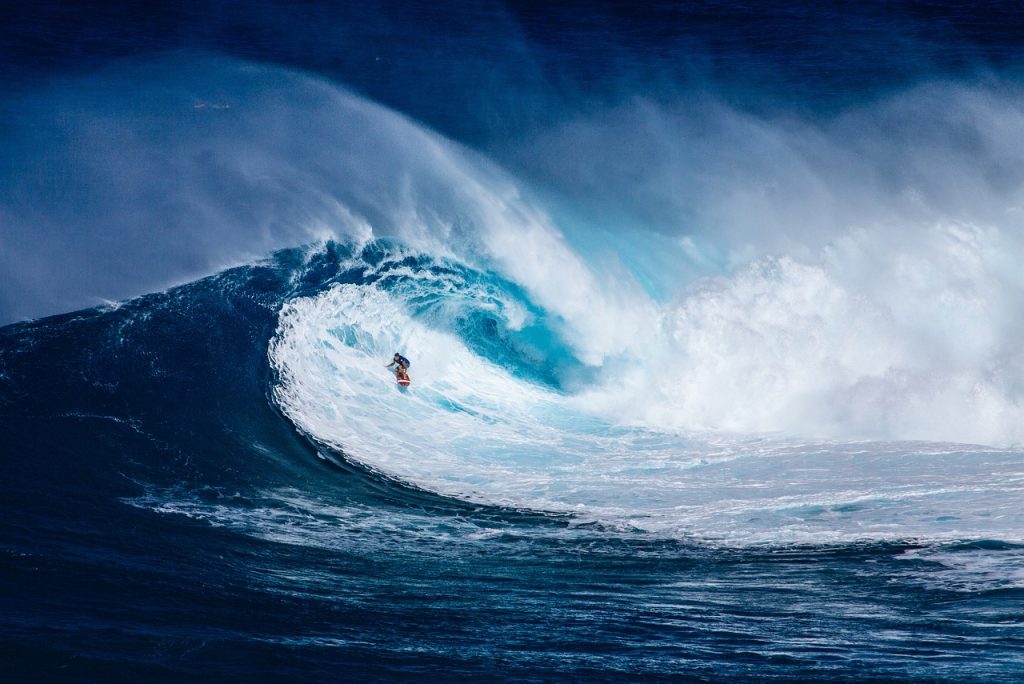
Change can be a frightening—or exhilarating experience. We do have choices. Not only is our own career at stake, but the overall position of the careers of countless others. How your organization perceives you, how you position yourself in the global discussion on these issues, will make a huge difference. In my advisory work, I insist on the involvement of the CEO, because I know that the impact of what we do can significantly change the performance of the enterprise.
Your leadership skills, your ability to understand the strategy impacts and speak the language of corporate strategy—the CEO’s language—of position and shareholder value, will set you apart.
E pili mau nâ pômaika`i me `oe!
(Basically, Hawaiian for Best of Luck! )